Tradition
Sufi Zikr
Sufism is the mystical, inward dimension of Islam. Its central practice is zikr (dhikr) — the remembrance of God through the rhythmic repetition of divine names and sacred phrases, chanted aloud in circles or whispered silently with the breath. Zikr polishes the heart until it reflects the Divine.
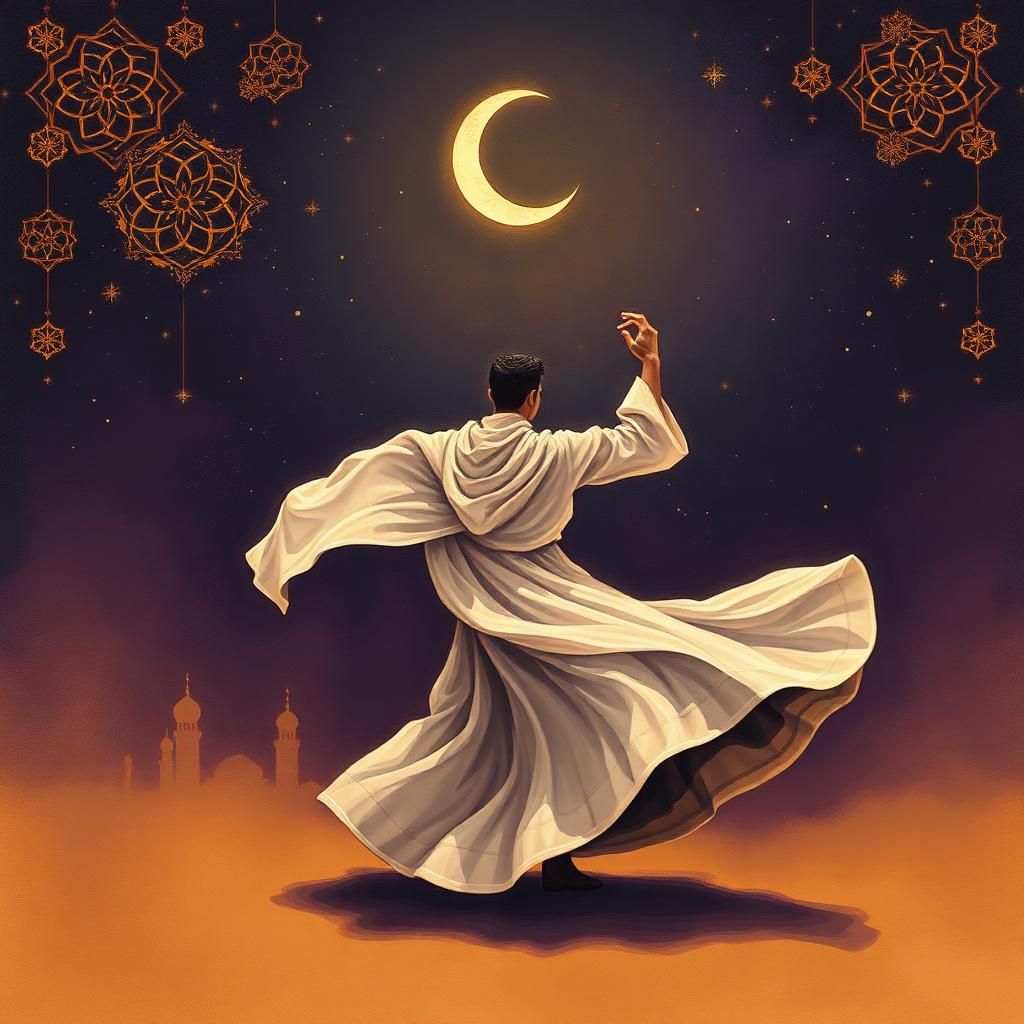
For over a thousand years, Sufi orders from Konya to Fez to Lahore have gathered to chant zikr in unison — sometimes still and seated, sometimes with breath, movement, drum, or the whirling turn of the Mevlevi dervishes. The phrases themselves are simple: there is no god but God; God alone; O Ever-Living, O Self-Sustaining. Their power lies in repetition, sincerity, and surrender. Rumi, Ibn Arabi, and Al-Ghazali all described zikr as the shortest path from the tongue to the heart.
Featured mantras
La ilaha illallah
There is no god but God — the central Sufi zikr of divine unity and the heart of Islamic remembrance.
Allah Hu
God — He, the Absolute. The breath-zikr in which the name of God dissolves into pure presence.
Ya Hayy Ya Qayyum
O Ever-Living, O Self-Sustaining — the Sufi zikr of vitality, healing, and renewal.
Hasbi Rabbi Jallallah
My Lord is enough for me — a Sufi zikr of trust, surrender, and release from worry.
Ya Wadud
O Most Loving One — the Sufi zikr of divine love, tenderness, and the opening of the heart.