Om (Aum)
The primordial sound — the seed from which every mantra arises.
Original
Transliteration
Oṃ (A-U-M)
Translation
The primordial vibration — the sound of all that is.
Quick answer
Om (Aum) is the primordial sound of Hindu, Buddhist, and yogic tradition — a single syllable made of A, U, M and the silence that follows, chanted to steady the mind and open every practice.
- Tradition
- Hindu / Vedic
- Language
- Sanskrit
- Repetitions
- 3, 11, or 108 times.
- Best time
- Any time. Traditionally at the opening and closing of any practice.
- Best for
- Beginning and ending practice, Meditation, Steadying the mind
Line by line
A
The waking state — creation, the world of form.
U
The dream state — sustenance, the subtle world.
M
Deep sleep — dissolution, the unmanifest.
The silence after
Turiya — the fourth, pure awareness in which the other three arise.
Meaning
Literal
The single syllable containing the three sounds A, U, and M, followed by silence.
Spiritual interpretation
The Mandukya Upanishad devotes itself entirely to this one syllable. Om is not a word about reality — it is said to be the vibration of reality itself. Chanting it is less an act of speaking than of listening to the sound that is already sounding.
What this mantra is used for
How to chant
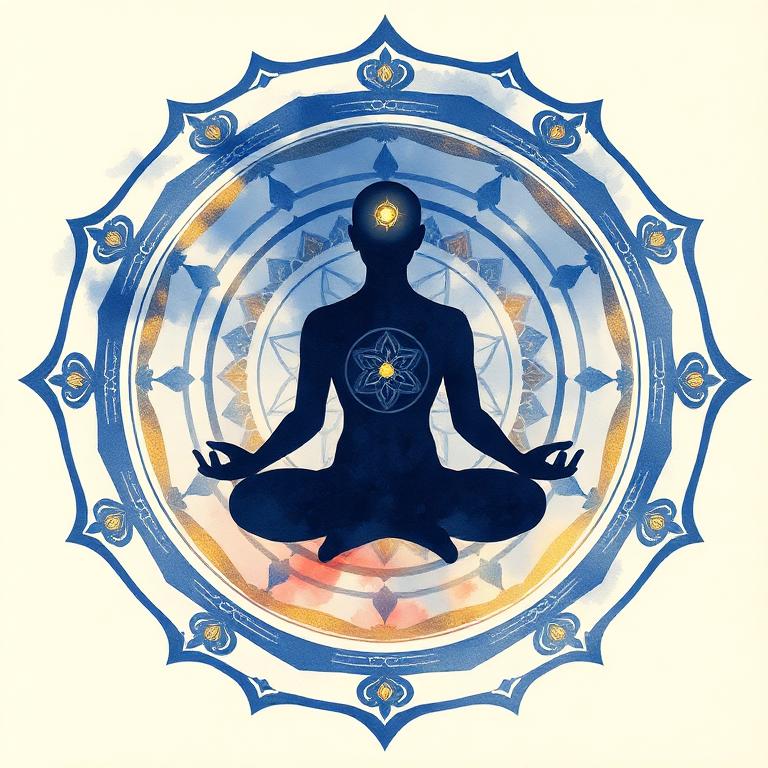
Sit upright and inhale fully. Let the sound open with 'aah' in the belly, roll through 'oooh' in the chest, and close with 'mmm' at the lips — then rest in the silence that follows before the next breath.
When to chant
Any time. Traditionally at the opening and closing of any practice.
Traditional count: 3, 11, or 108 times.
Origin & context
The Mandukya Upanishad, the Chandogya Upanishad, and the Yoga Sutras of Patanjali, where Om is named as the sound-symbol of the divine.
Related mantras
So Hum
'I am that.' The natural mantra that moves with your breath.
Shanti Mantra
A prayer of peace for all beings — threefold peace for body, mind, and spirit.
Gayatri Mantra
The mother of the Vedas — a prayer for the illumination of the intellect.
Continue exploring
Share this mantra
Send the sacred sound, meaning, and a link to this page with someone who may benefit.
Frequently asked questions
What does Om mean?+
Om is the primordial vibration from which all sound and form are said to arise. Its three sounds — A, U, M — represent waking, dreaming, and deep sleep, and the silence after represents pure awareness.
Is it Om or Aum?+
They are the same. 'Aum' spells out the three component sounds; 'Om' reflects how the syllable is pronounced when chanted.
How do I chant Om correctly?+
Let the sound move from the belly ('aah') to the chest ('oooh') to the lips ('mmm'), then rest in the silence before the next breath.