Guru Mantra
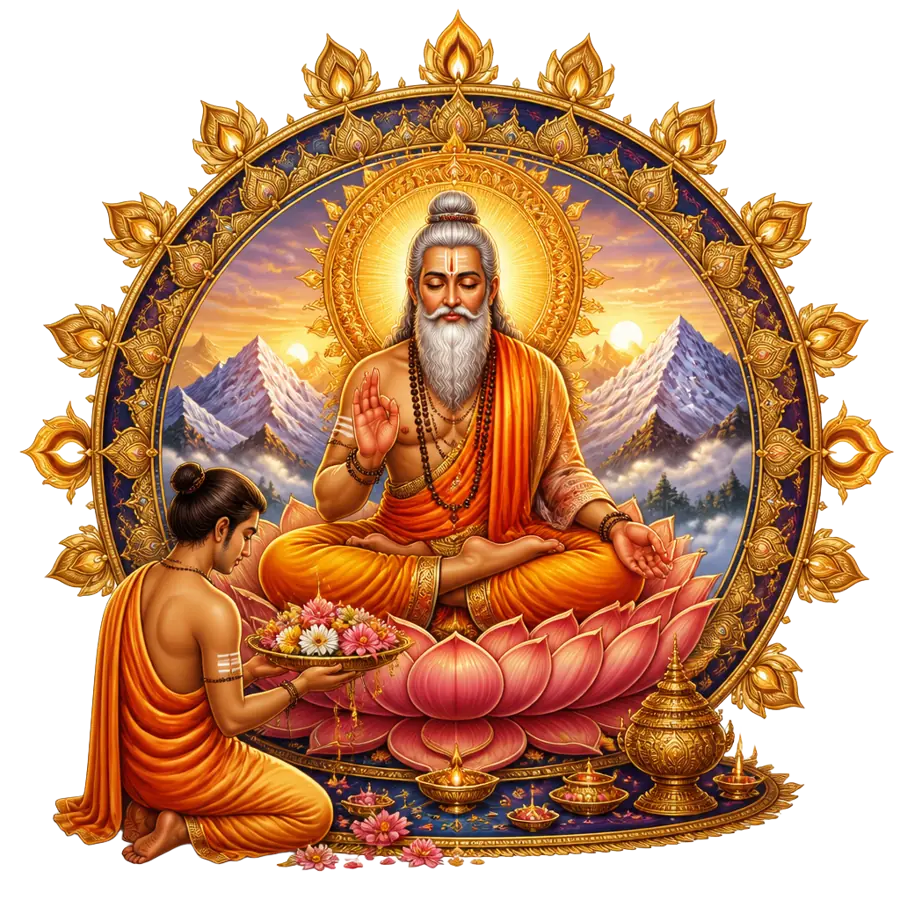
A bow to the teacher — the light that removes the darkness of ignorance.
Original
Transliteration
Gurur Brahmā Gurur Viṣṇuḥ Gurur Devo Maheśvaraḥ Guruḥ Sākṣāt Parabrahma Tasmai Śrī Gurave Namaḥ
Translation
The guru is Brahma, the guru is Vishnu, the guru is the great lord Shiva. The guru is truly the supreme reality itself — to that revered teacher, I bow.
Quick answer
The Guru Mantra — Gurur Brahma Gurur Vishnu — is a Sanskrit verse honoring the teacher as the embodiment of the divine, chanted before study and practice and especially on Guru Purnima.
- Tradition
- Hindu / Vedic
- Language
- Sanskrit
- Repetitions
- 3 or 108 times.
- Best time
- Before study or practice. Guru Purnima, the full moon of the teacher, is the most auspicious day.
- Best for
- Honoring one's teacher, Beginning study or practice, Guru Purnima


Line by line
Gurur Brahmā
The teacher is Brahma — the creative principle that brings understanding into being.
Gurur Viṣṇuḥ
The teacher is Vishnu — the sustaining principle that preserves the practice.
Gurur Devo Maheśvaraḥ
The teacher is Shiva — the principle that dissolves illusion.
Guruḥ Sākṣāt Parabrahma
The teacher is, visibly, the supreme reality itself.
Tasmai Śrī Gurave Namaḥ
To that revered teacher, I bow.
Meaning
Literal
A verse identifying the teacher with the three great functions of the divine — creation, preservation, and dissolution — and finally with the absolute itself.
Spiritual interpretation
The word guru means 'dispeller of darkness' — gu (darkness) and ru (that which removes). The verse does not deify a person; it honors the function of teaching wherever it appears. Whatever removes ignorance — a person, a book, a hardship, a moment of silence — is acting as guru.
What this mantra is used for
How to chant
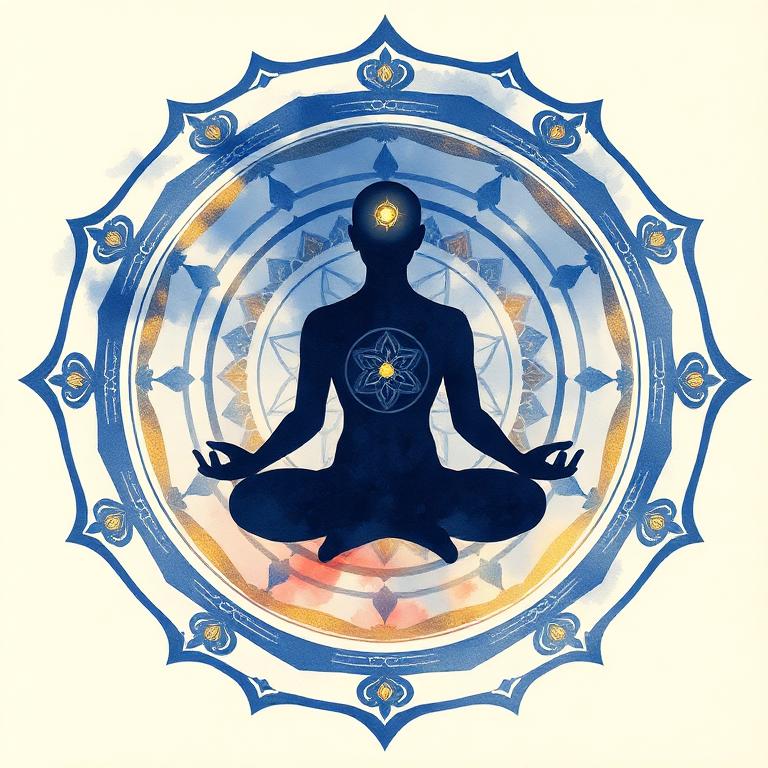
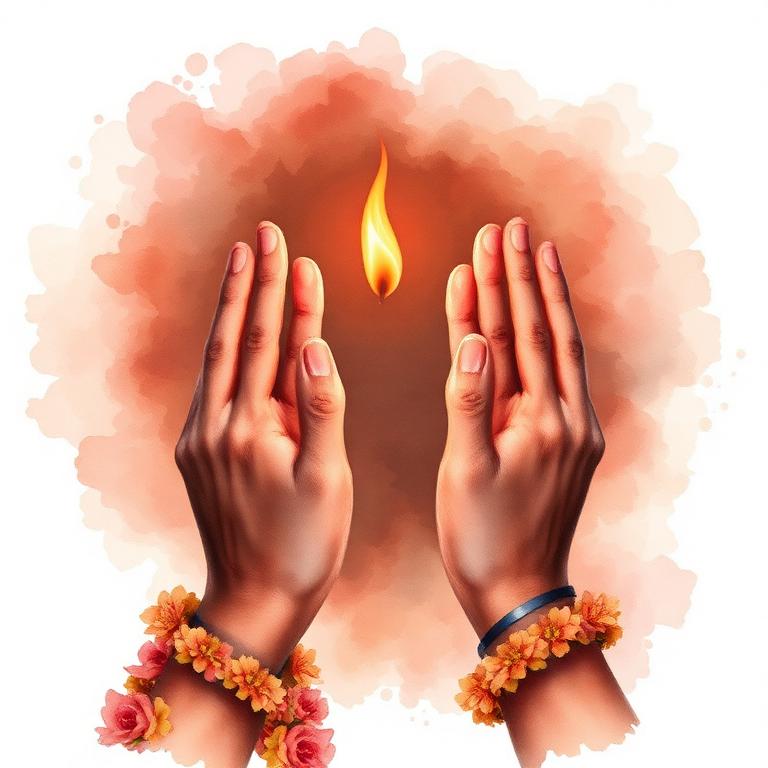
Chanted at the beginning of practice, class, or study — traditionally three times, seated, with the hands joined at the heart.
When to chant
Before study or practice. Guru Purnima, the full moon of the teacher, is the most auspicious day.
Traditional count: 3 or 108 times.
Origin & context
The Guru Gita, part of the Skanda Purana — among the most widely recited verses in Indian spiritual life.
Related mantras
Gayatri Mantra
The mother of the Vedas — a prayer for the illumination of the intellect.
Saraswati Mantra
A bow to Saraswati — the goddess of wisdom, learning, and clear speech.
Om (Aum)
The primordial sound — the seed from which every mantra arises.
Continue exploring
Share this mantra
Send the sacred sound, meaning, and a link to this page with someone who may benefit.
Frequently asked questions
What does the Guru Mantra mean?+
It honors the teacher as Brahma, Vishnu, and Shiva — creation, preservation, and dissolution — and ultimately as the supreme reality itself.
What does the word 'guru' actually mean?+
'Gu' means darkness and 'ru' means remover — a guru is that which removes the darkness of ignorance.
Do I need a living teacher to chant it?+
No. The verse honors the principle of teaching wherever it appears — in a person, a text, or an experience that awakens understanding.
When is the Guru Mantra chanted?+
Before study, meditation, or yoga practice, and especially on Guru Purnima, the full moon dedicated to the teacher.